The Botanical Ink Guide Is Finally Here
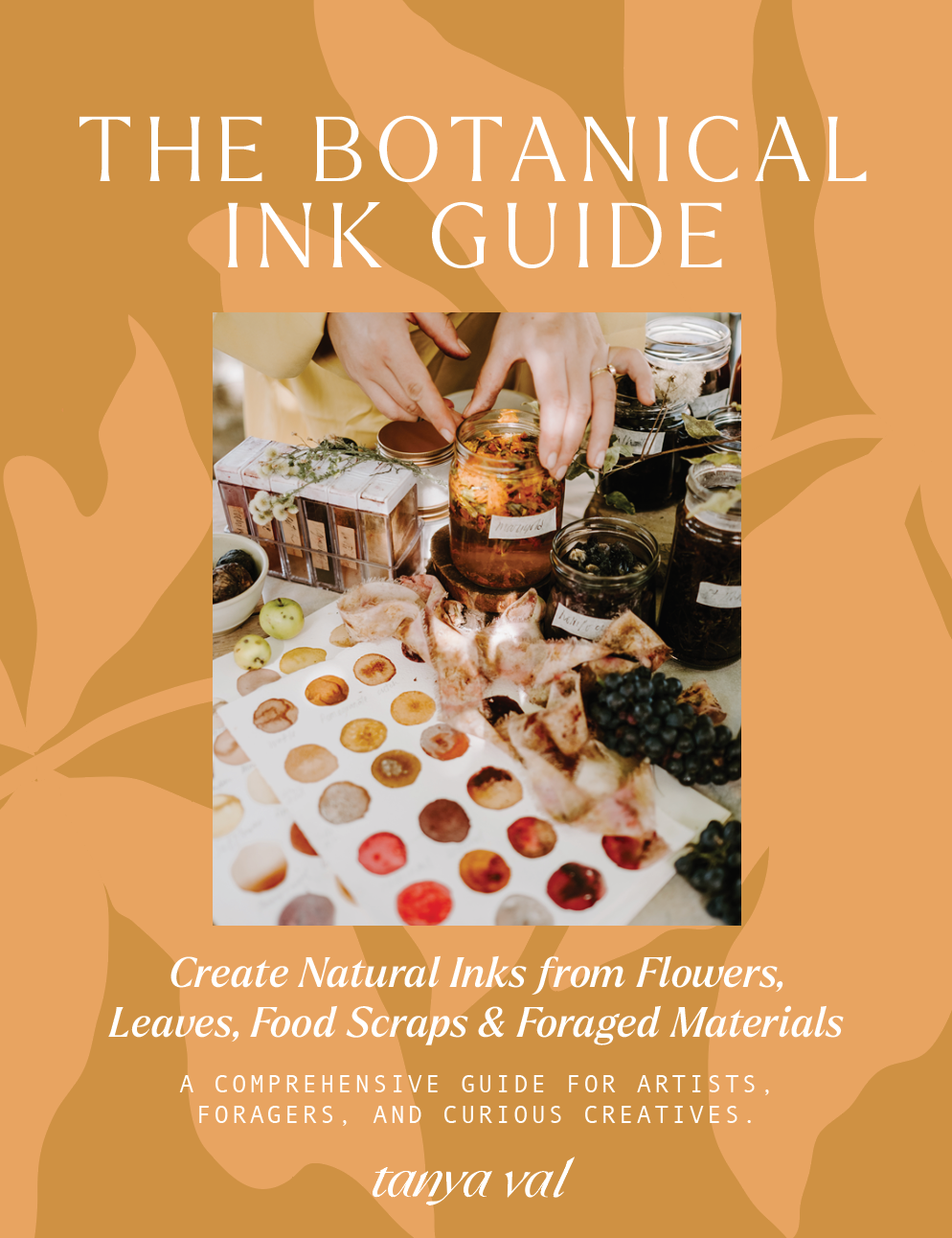
The Botanical Ink Guide is a thoughtfully designed digital resource exploring the process of creating natural inks from flowers, leaves, bark, berries, kitchen scraps, and foraged materials.
Created by artist Tanya Val after years of working with natural pigments, botanical materials, and foraged color, this guide brings together the practical foundations and the more intuitive aspects of working with living color. Drawing from her background in painting, floral design, foraging, and nature-based art practices, Tanya works exclusively with natural inks and pigments in her own studio practice, painting original works that are collected by buyers who value the living, seasonal quality of botanical color. This guide shares the methods, materials, and experimentation that have shaped that practice over nearly a decade.
Inside, you'll learn how to extract color from plants, understand pigment behavior, shape and preserve ink, work with modifiers and binders, and learn to see the landscape around you as a living source of color.
Rather than treating natural ink making as a fixed formula, this guide encourages observation, experimentation, and curiosity. Natural pigments shift with time, light, pH, season, and environment. Part of their beauty is that they remain active and responsive long after they leave the plant.
What's inside:
The foundations — what ink actually is, how it works, and why natural color behaves so differently from anything that comes out of a tube. Once you understand this, everything else starts to make sense.
Tools and workspace — a practical, honest list. Most of my tools are thrifted. You don't need much to begin.
Foraging, growing, and sourcing color — how to gather materials ethically, what grows in different regions, which invasive species you can harvest freely and heavily, how to grow your own dye plants, and how to source what you can't find locally.
Extraction methods — heat, gentle steep, solar, cold, and fermentation, explained clearly with guidance on which method suits which material.
Pigment families — this is where it gets genuinely interesting. Anthocyanins, tannins, flavonoids, indigoids, betalains and more. Understanding which family you're working with tells you how a color will behave before you even begin extracting it.
Modifiers and binders — gum arabic, glycerin, iron, pH shifters. Small additions that change everything about how an ink flows, sits, and lasts.
Preservation and storage — how to extend the life of what you make, what to refrigerate, when to add alcohol, how to label so your collection becomes a record of your learning.
30+ ink recipes — organized by color family. Berries, flowers, bark, kitchen scraps, insects, and fermentation based blues. Each recipe includes extraction method, temperature, cooking time, stability, and shelf life. Studio notes throughout share what I've actually learned from making each one.
Using ink in practice — surfaces, tools, layering, and pairing botanical inks with raw pigments.
Kid friendly ink making — how to share this with children safely and joyfully. Safe materials, simple methods, and a long list of projects to make together.
Finishing and caring for artwork — sealing, varnishing, framing, and what to tell people who buy your work.
Troubleshooting and FAQs — the questions I get asked most often, answered honestly.
Who this is for:
The forager who wants to bring what she finds into her creative practice. The artist who has been working with synthetic color and feels something is missing. The parent who wants to make something real with their kids. Anyone who wants to slow down and pay closer attention to what grows around them.
You don't need to know anything yet. That's what the guide is for.
What you'll receive:
A 55 page PDF delivered straight to your inbox. Designed to read easily on screen or print at home. Licensed for personal use.
And somewhere along the way, this guide began taking shape.
The Botanical Ink Guide has been living quietly in my heart for a very long time. Not as a perfect polished idea, but as a desire to gather everything I’ve learned into one place and finally share it.
I wanted it to feel like more than instructions.
I wanted it to feel like sitting at a table together surrounded by jars of ink, flower petals, stained paper towels, and pages filled with swatches. I wanted it to feel approachable whether you are a professional artist, a curious beginner, a parent wanting to create with your children, or simply someone who misses making things with their hands.
Inside the guide, I share the foundations of natural ink making, pigment behavior, foraging ethics, extraction methods, preservation techniques, and dozens of recipes built from flowers, bark, berries, kitchen scraps, roots, and foraged materials. But more than that, I share the way this practice changed my relationship with creativity itself.

This project carries years of experimentation, countless stained pots, stacks of notebooks, and so much love.
And now it’s finally ready to leave my hands and enter yours.
If you’ve ever felt drawn to creating more slowly, more seasonally, or more connected to the natural world around you, I made this for you.
The Botanical Ink Guide is officially available now, and I genuinely cannot wait to see what you create with it.
For years, natural ink making has quietly shaped the way I move through the world.
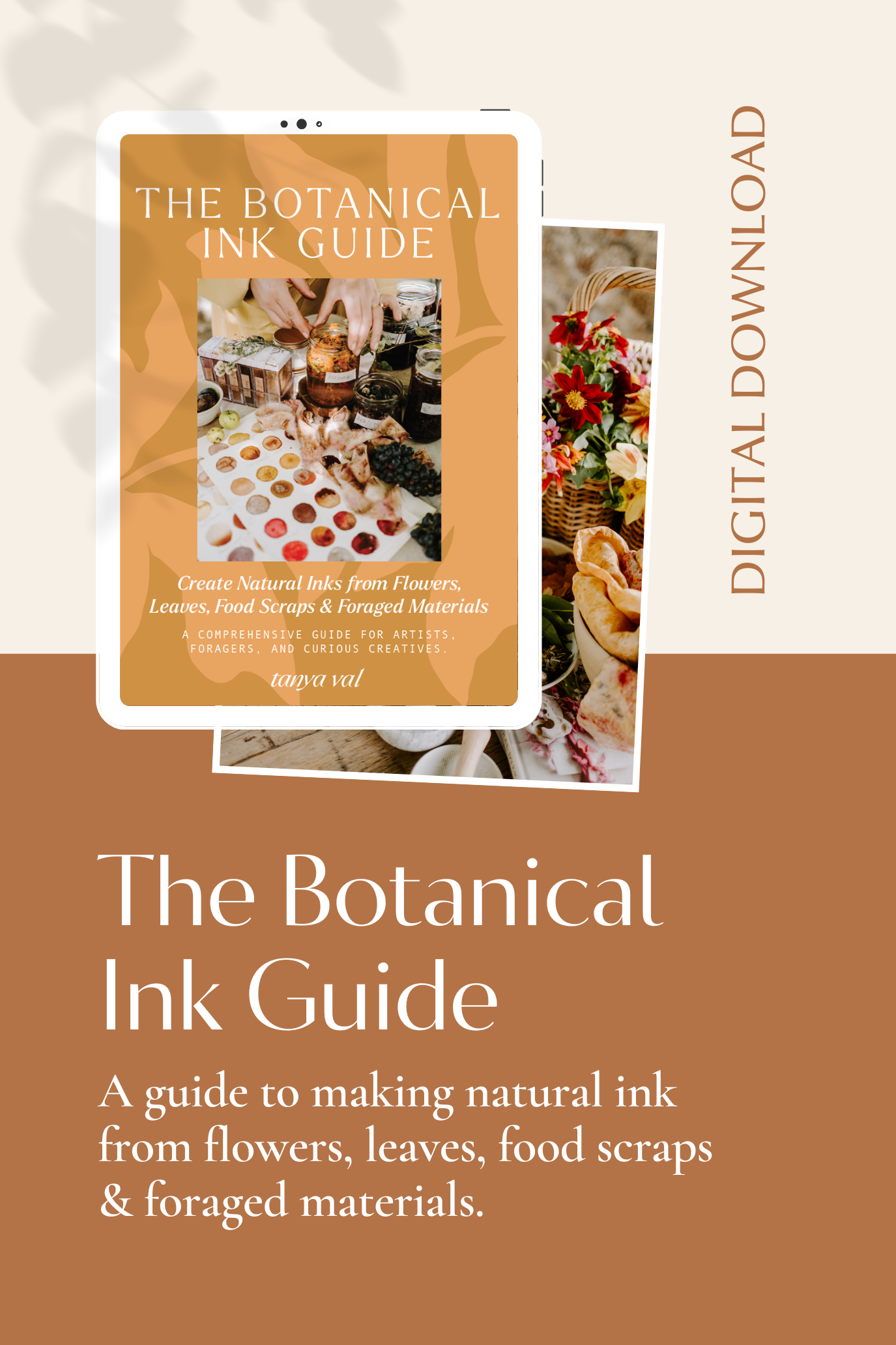
Long before this guide existed, there were little moments that slowly led me here. Picking blueberries in the mountains of Alaska with stained fingertips. Watching marigold petals tint warm water gold on my stove. Noticing the deep reds hidden inside alder cones or the soft pink held within an avocado pit. Gathering flowers after wedding work and realizing that color was everywhere if I paid enough attention.
What started as curiosity eventually became part of my daily life.
I spent years experimenting, making mistakes, ruining batches, learning why some colors fade while others deepen with time. I photographed a new natural ink every day for a month during one season of my life, completely obsessed with understanding how plants release color and how those colors behave once they reach paper. Over time, that practice turned into paintings, workshops, retreats, and conversations with thousands of people who wanted to reconnect with creating more intentionally.

Natural ink making taught me to slow down.
To pay attention.
To let the process lead instead of forcing an outcome.
It reminded me that beauty does not need to be permanent to matter.
Some of these inks will shift over time. Some will fade softly in sunlight. Others will hold their depth for decades. That impermanence became part of why I fell in love with this work in the first place. The materials feel alive. They continue responding long after they dry.
Today, my studio often shares space with my daughter’s room. We paint beside each other, make messes together, and gather color from the same landscape that shaped me growing up. In many ways, this guide feels deeply connected to that full circle moment.
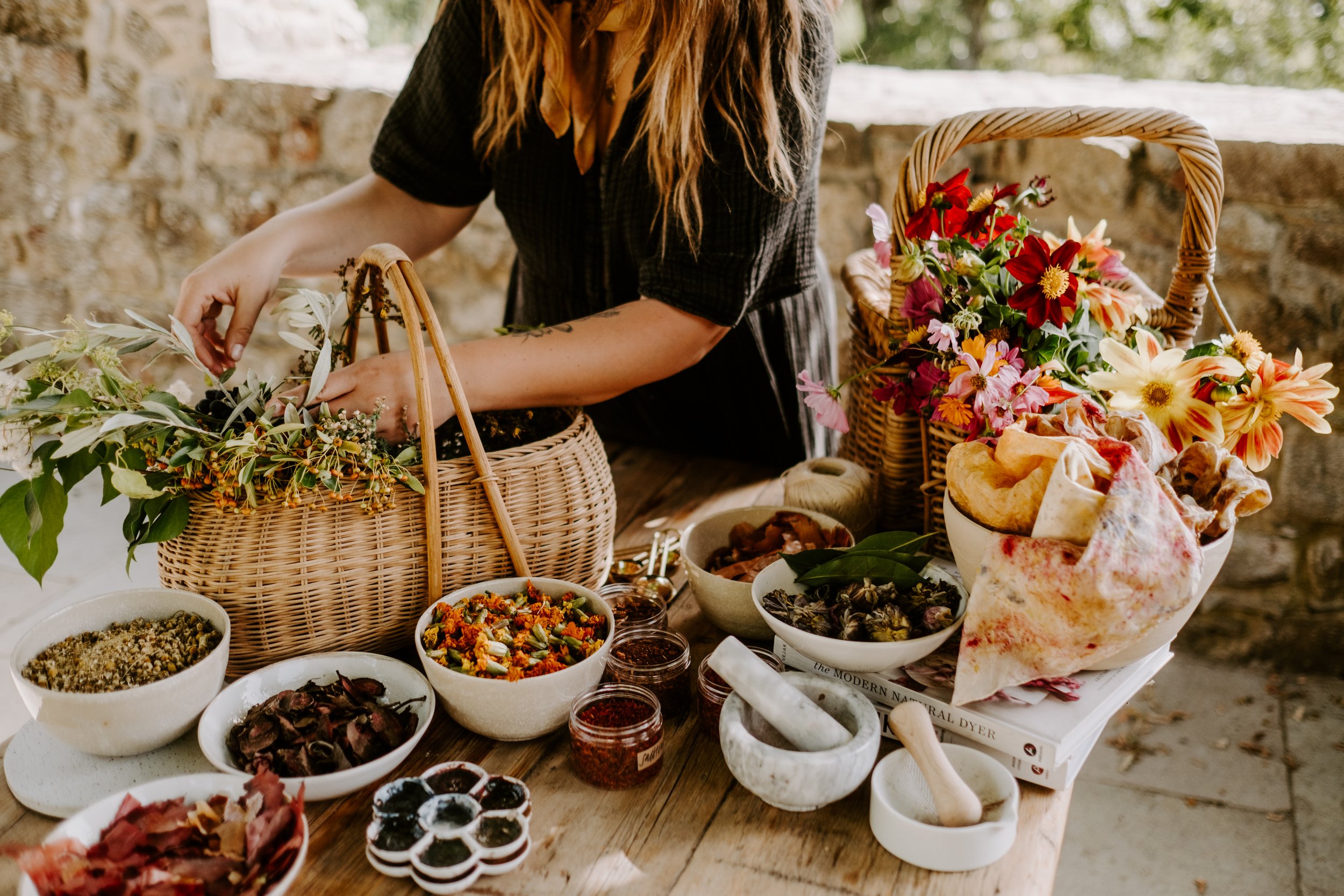
Inside the guide, you’ll find:
• The foundations of natural ink making and how ink actually works
• Ethical foraging practices and sourcing materials responsibly
• Step-by-step extraction methods including heat extraction, solar extraction, steeping, and fermentation
• Deep dives into pigment families and why colors shift over time
• How to work with modifiers, binders, pH, gum arabic, glycerin, and iron
• Dozens of natural ink recipes made from flowers, berries, bark, roots, kitchen scraps, leaves, cones, lichens, and more
• Preservation, storage, and shelf life guidance
• How I use natural inks in my own art practice
• Kid-friendly natural ink projects and ways to create alongside children
• Finishing and caring for botanical artwork
• Troubleshooting guidance and FAQs from years of experimentation
The guide is part science, part creative practice, and part invitation to slow down and see the natural world differently.