The Botanical Ink Guide is a thoughtfully designed digital resource exploring the process of creating natural inks from flowers, leaves, bark, berries, kitchen scraps, and foraged materials.
Created by artist Tanya Val after years of working with natural pigments, botanical materials, and foraged color, this guide brings together the practical foundations and the more intuitive aspects of working with living color. Drawing from her background in painting, floral design, foraging, and nature-based art practices, Tanya works exclusively with natural inks and pigments in her own studio practice, painting original works that are collected by buyers who value the living, seasonal quality of botanical color. This guide shares the methods, materials, and experimentation that have shaped that practice over nearly a decade.
Inside, you'll learn how to extract color from plants, understand pigment behavior, shape and preserve ink, work with modifiers and binders, and learn to see the landscape around you as a living source of color.
Rather than treating natural ink making as a fixed formula, this guide encourages observation, experimentation, and curiosity. Natural pigments shift with time, light, pH, season, and environment. Part of their beauty is that they remain active and responsive long after they leave the plant.
What's inside:
The foundations — what ink actually is, how it works, and why natural color behaves so differently from anything that comes out of a tube. Once you understand this, everything else starts to make sense.
Tools and workspace — a practical, honest list. Most of my tools are thrifted. You don't need much to begin.
Foraging, growing, and sourcing color — how to gather materials ethically, what grows in different regions, which invasive species you can harvest freely and heavily, how to grow your own dye plants, and how to source what you can't find locally.
Extraction methods — heat, gentle steep, solar, cold, and fermentation, explained clearly with guidance on which method suits which material.
Pigment families — this is where it gets genuinely interesting. Anthocyanins, tannins, flavonoids, indigoids, betalains and more. Understanding which family you're working with tells you how a color will behave before you even begin extracting it.
Modifiers and binders — gum arabic, glycerin, iron, pH shifters. Small additions that change everything about how an ink flows, sits, and lasts.
Preservation and storage — how to extend the life of what you make, what to refrigerate, when to add alcohol, how to label so your collection becomes a record of your learning.
30+ ink recipes — organized by color family. Berries, flowers, bark, kitchen scraps, insects, and fermentation based blues. Each recipe includes extraction method, temperature, cooking time, stability, and shelf life. Studio notes throughout share what I've actually learned from making each one.
Using ink in practice — surfaces, tools, layering, and pairing botanical inks with raw pigments.
Kid friendly ink making — how to share this with children safely and joyfully. Safe materials, simple methods, and a long list of projects to make together.
Finishing and caring for artwork — sealing, varnishing, framing, and what to tell people who buy your work.
Troubleshooting and FAQs — the questions I get asked most often, answered honestly.
Who this is for:
The forager who wants to bring what she finds into her creative practice. The artist who has been working with synthetic color and feels something is missing. The parent who wants to make something real with their kids. Anyone who wants to slow down and pay closer attention to what grows around them.
You don't need to know anything yet. That's what the guide is for.
What you'll receive:
A 55 page PDF delivered straight to your inbox. Designed to read easily on screen or print at home. Licensed for personal use.
The Botanical Ink Guide is a thoughtfully designed digital resource exploring the process of creating natural inks from flowers, leaves, bark, berries, kitchen scraps, and foraged materials.
Created by artist Tanya Val after years of working with natural pigments, botanical materials, and foraged color, this guide brings together the practical foundations and the more intuitive aspects of working with living color. Drawing from her background in painting, floral design, foraging, and nature-based art practices, Tanya works exclusively with natural inks and pigments in her own studio practice, painting original works that are collected by buyers who value the living, seasonal quality of botanical color. This guide shares the methods, materials, and experimentation that have shaped that practice over nearly a decade.
Inside, you'll learn how to extract color from plants, understand pigment behavior, shape and preserve ink, work with modifiers and binders, and learn to see the landscape around you as a living source of color.
Rather than treating natural ink making as a fixed formula, this guide encourages observation, experimentation, and curiosity. Natural pigments shift with time, light, pH, season, and environment. Part of their beauty is that they remain active and responsive long after they leave the plant.
What's inside:
The foundations — what ink actually is, how it works, and why natural color behaves so differently from anything that comes out of a tube. Once you understand this, everything else starts to make sense.
Tools and workspace — a practical, honest list. Most of my tools are thrifted. You don't need much to begin.
Foraging, growing, and sourcing color — how to gather materials ethically, what grows in different regions, which invasive species you can harvest freely and heavily, how to grow your own dye plants, and how to source what you can't find locally.
Extraction methods — heat, gentle steep, solar, cold, and fermentation, explained clearly with guidance on which method suits which material.
Pigment families — this is where it gets genuinely interesting. Anthocyanins, tannins, flavonoids, indigoids, betalains and more. Understanding which family you're working with tells you how a color will behave before you even begin extracting it.
Modifiers and binders — gum arabic, glycerin, iron, pH shifters. Small additions that change everything about how an ink flows, sits, and lasts.
Preservation and storage — how to extend the life of what you make, what to refrigerate, when to add alcohol, how to label so your collection becomes a record of your learning.
30+ ink recipes — organized by color family. Berries, flowers, bark, kitchen scraps, insects, and fermentation based blues. Each recipe includes extraction method, temperature, cooking time, stability, and shelf life. Studio notes throughout share what I've actually learned from making each one.
Using ink in practice — surfaces, tools, layering, and pairing botanical inks with raw pigments.
Kid friendly ink making — how to share this with children safely and joyfully. Safe materials, simple methods, and a long list of projects to make together.
Finishing and caring for artwork — sealing, varnishing, framing, and what to tell people who buy your work.
Troubleshooting and FAQs — the questions I get asked most often, answered honestly.
Who this is for:
The forager who wants to bring what she finds into her creative practice. The artist who has been working with synthetic color and feels something is missing. The parent who wants to make something real with their kids. Anyone who wants to slow down and pay closer attention to what grows around them.
You don't need to know anything yet. That's what the guide is for.
What you'll receive:
A 55 page PDF delivered straight to your inbox. Designed to read easily on screen or print at home. Licensed for personal use.
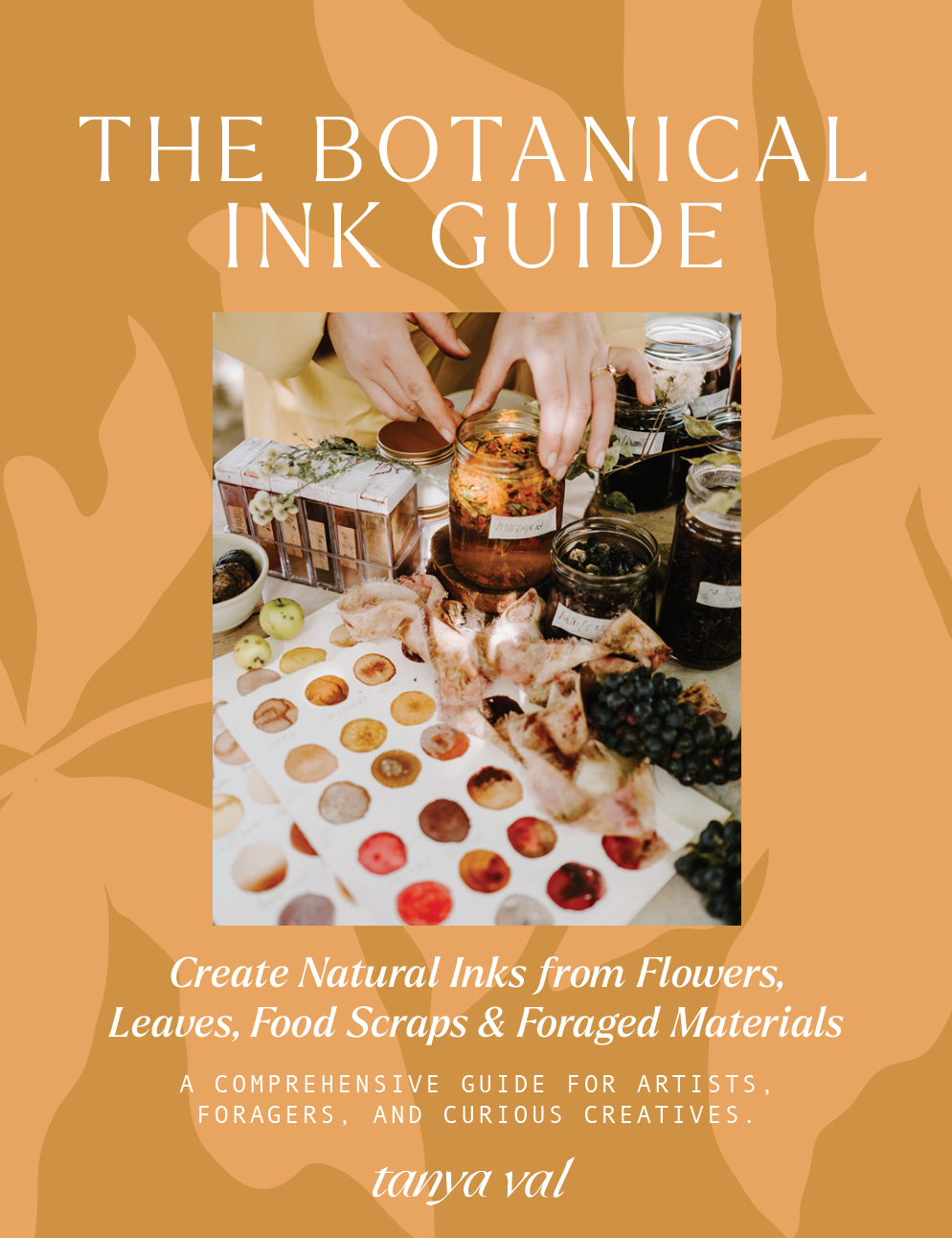 Image 1 of 10
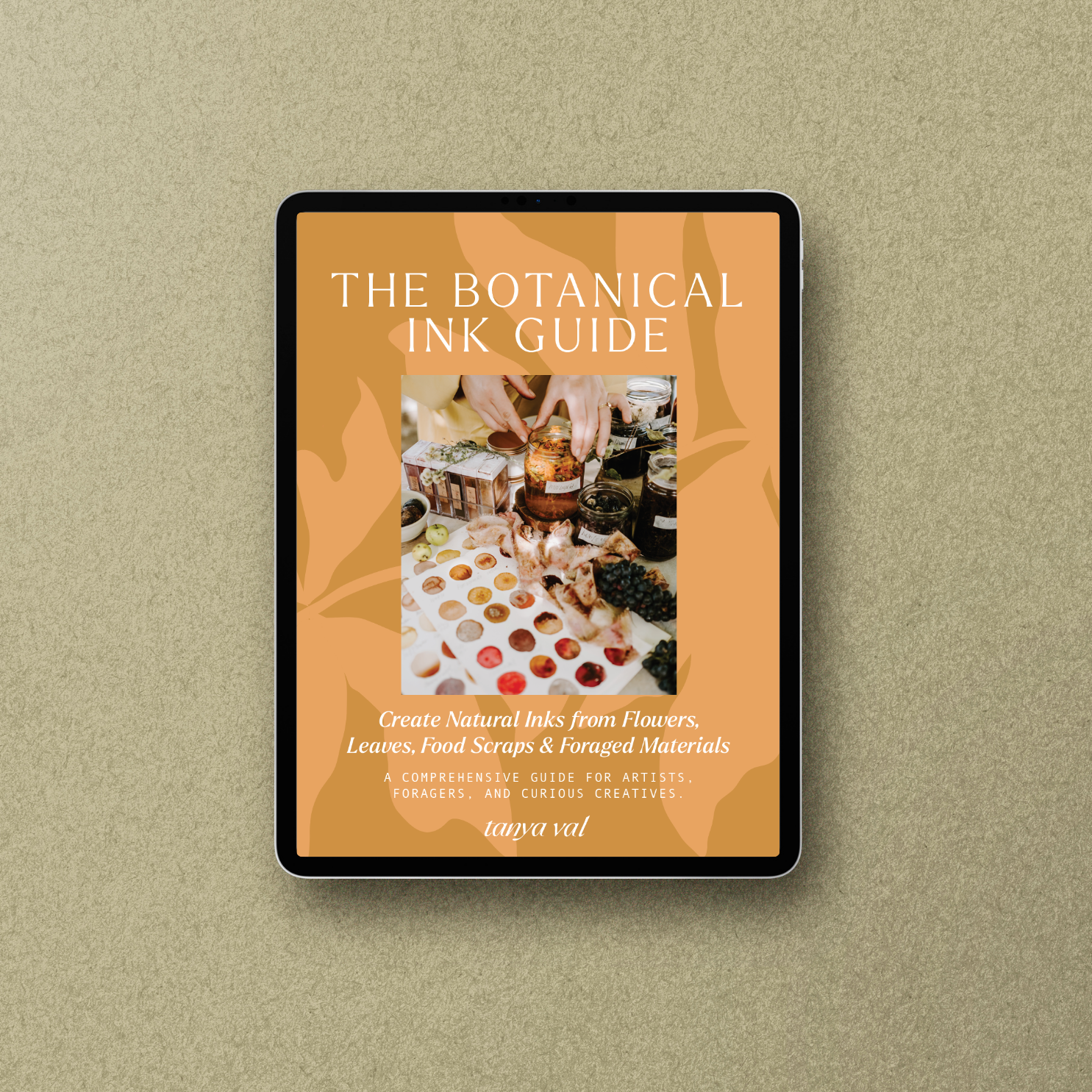 Image 2 of 10
 Image 3 of 10
 Image 4 of 10
 Image 5 of 10
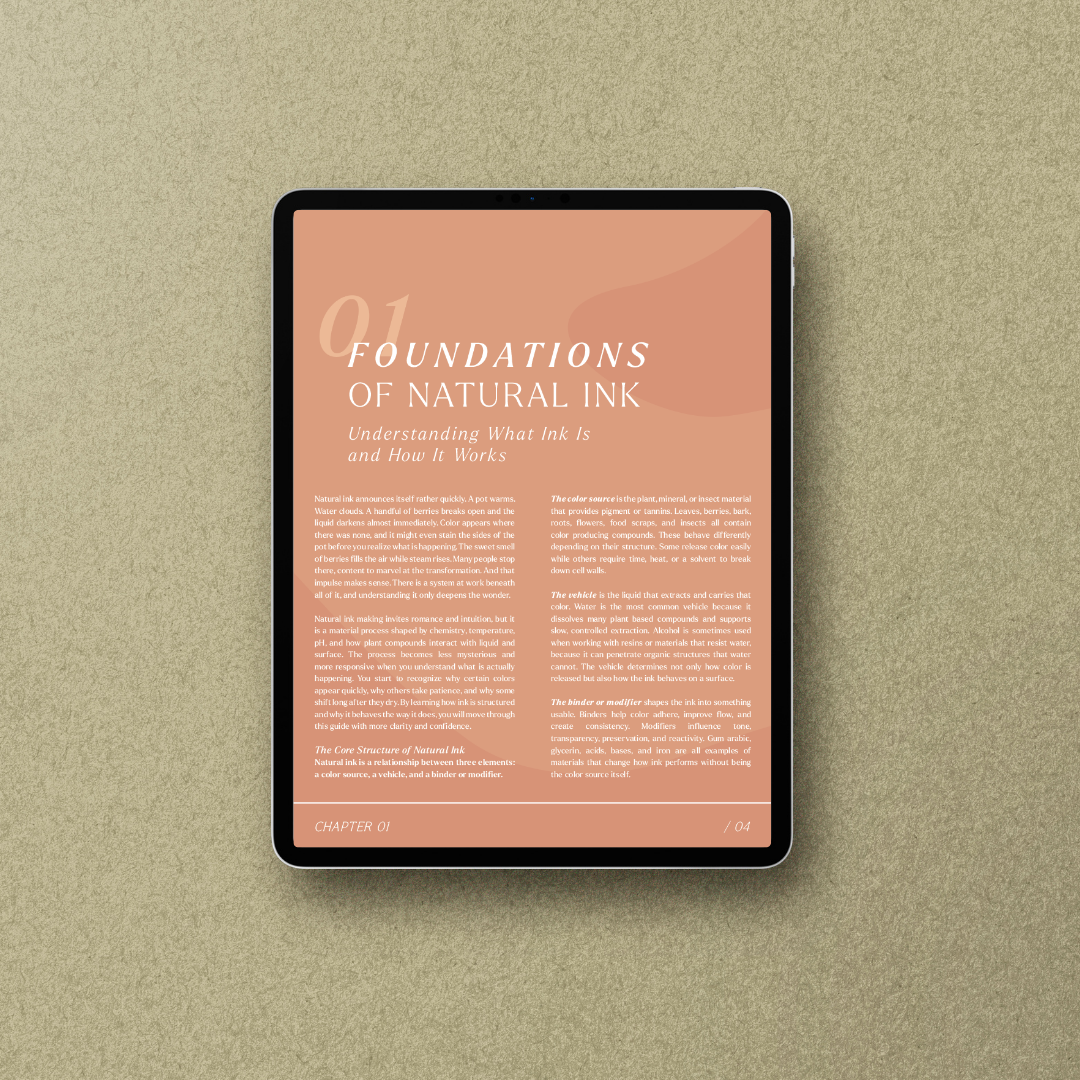 Image 6 of 10
 Image 7 of 10
 Image 8 of 10
 Image 9 of 10
 Image 10 of 10